Episode Transcript
[00:00:01] Speaker A: You're listening to the Doc Lounge Podcast. This is a place for candid conversations with the healthcare industry's top physicians, executives and thought leaders.
This podcast is made possible by Pacific Companies, your trusted advisor in physician recruitment.
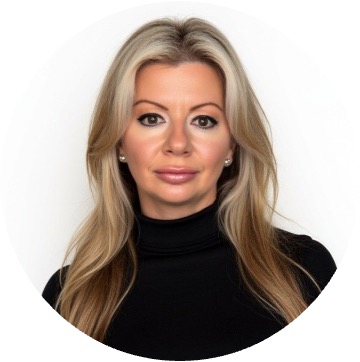
[00:00:20] Speaker B: Welcome back to the Doc Lounge Podcast where we bring you real conversations with physicians and healthcare leaders shaping the future of care. I'm your host, Stacey Doyle, Senior director of Marketing at Pacific Companies. And today I'm incredibly honored to introduce Dr. Louisa Ciprono. Dr. Kiprono's story is nothing short of extraordinary. From growing up as a refugee in communist Romania. Romania, excuse me. To becoming a maternal fetal medicine specialist here in the US her journey is one of resilience, grit, and purpose. She's also a US Air Force veteran and the founder and CEO of Telemed mfm, a nationwide telemedicine practice experience. Expanding access to high risk pregnancy care across geographic barriers. Beyond her clinical work, Dr. Caprono is a powerful advocate for women in medicine and leadership. Through mentorship speaking, humanitarian missions, and community outreach, she's helping women not just succeed, but truly thrive. She's also the author of the Amazon best selling memoir, Push Then Breathe, Trauma, Triumph and the Making of an American Doctor, where she shares her deeply personal journey from trauma to transformation and her mission to empower others to heal, lead and rise. Dr. Caprono, we're so excited to have you here today. Welcome to the show.
[00:01:38] Speaker C: Thank you, Stacy. I am honored to be here in front of you and in front of your audience.
[00:01:43] Speaker B: Well, we couldn't be more excited to have you. Love having hearing from different physicians about how they got into their specialty and, you know, how they started. But you really have an incredible journey, obviously from being a refugee in Romania to.
[00:01:57] Speaker C: To.
[00:01:57] Speaker B: To where you are today. Tell us a little bit about that.
[00:02:00] Speaker C: Okay, I will keep it short because that in itself could be a.
A podcast episode. Right? So I, I was born and raised in communist Romania. I came to United states for a two months visit one month short of the age of 19. Due to some very unfortunate and unforeseen circumstances, I was not allowed to go back to Romania.
So 15 years after I arrived to this country, I succeeded and graduated medical school with the degree of Doctor of Osteopathy. I was also a recipient, a very proud recipient, I may add, of the U.S. air Force Scholarship program. So pretty much what it is is the Air Force. I applied and as a candidate, I got accepted and honored to get the full scholarship, which really is a free ride to go to school, medical school afterwards. So I decided to Do OBGYN as my residency. I did a military combined military residency in Ohio. I did my payback to the Air Force in Keesler Air Force Base in Mississippi. And afterwards I went back to school, went back to training really. And I finished my fellowship in maternal fetal medicine and my master's in biomedical sciences. So it was. Was a tandem program.
[00:03:24] Speaker B: Awesome.
[00:03:25] Speaker C: So afterwards I became the medical director of MFM practice in Southern Indiana for about five years.
Then I moved to Texas. So presently I live with my family in San Antonio, Texas. So I've been here since 2019 and then was here the corporate director for five years for a large practice.
And then due to that practice disclosure, right after Covid, I opened my own practice in telemedicine. Telemed MFM is 100% telemedicine platform, virtual platform in high risk pregnancies consultation services. Except for procedures, for obvious reasons. We do full scope maternal fetal medicine, high risk pregnancies consultations, preconception counseling, everything that entails to high risk pregnancy and high risk obstetrical care.
Also in 2020, I got my executive MBA from University of Tennessee at Knoxville.
That's. And then I decided that probably I should stop.
I don't want to have a truly an Alphabet soup right after my name. So. Yeah, but I think, you know, it's too. It's really, Stacy, is we always grow and we always evolve. So, you know, to me age is just the number. And you know, as long as you feel intrigued and interested to, you know, to thrive and just keep going and discovering new sides of yourself, why not?
[00:05:01] Speaker B: You know, I love that and such a. Such an impressive and fascinating background I wanted to dive a little into because I know we have a lot of fellows and residents that listen what was really that defining moment when you knew maternal fetal medicine was. Was your calling.
[00:05:18] Speaker C: So I think it's really multifactorial and it morphed into it one to become a doctor. It always was my dream and my passion since I was the fifth grader. And then, you know, I, like you said, as I finished my medical school, really my, my first, my first interest was general surgery. Okay.
And I did my rotation in general surgery and I did not like it. And the reason was that was a lot of surgery, but not a lot of patient contact.
Okay. So when I say that, it's like I enjoy the, you know, the counseling part, I enjoy, don't take me wrong, when I was in the OR as OB gyn, I enjoyed it. But when I stepped out of the or, I really didn't miss it. Okay. But when I would step into the labor and delivery unit and I would counsel my patients and my high risk pregnancies as a resident or as a medical student and learning through the rotations what a specialty I may or may not like, I noticed, you know, it's, it like, it's almost like a draw. I mean, somebody says, must be some chemicals in labor and delivery that you guys love it so much. I said, no. It's like to me, obstetrics is like that. You hate it or you love can be lukewarm. Okay. Because obstetrics is like critical care. It can change in, in a split second. And you can't just be like, you know, I'm pondering what could be this. No, you gotta act. It's very fast paced and you have to, you know, listen to your gut, listen to your experience, you know, make sure that you fully, you know, look and assess your patient and then go with that.
You just can't, you know, take your time. When it comes to high risk pregnancies. I had, personally, I had high risk pregnancies myself with my, both my, my sons. But it is, it is a bond that, you know, first of all, as humans, any human being, you know, that's our, really our Achilles tendon. You know, we can all boast our riches, our smarts, right? That we are doing great until something health wise happens. And then really we are just scared and confused and we do not know what to do next because we're so, so vulnerable. And when it comes to pregnancy, it is heightened. I say 10 times over, 20 times over. Why? Because pregnancy outside a wedding, really, or outside marriage, pregnancy is the most happy or the happiest, the most fulfilling period in a family, but also a woman's life, right?
So imagine how much it hinges on a woman and on a pregnancy and on a, you know, to make sure that both, not only baby or not only mom, but both, the pregnancy is doing well, mom is doing great, the baby is safe and is growing appropriately. So as I was doing my OBGYN residency, you know, it just was very easy. It came very easy to me to take care of regular pregnancies, regular mom's low risk gestations.
But I have this detective kind of brain. So the more complex that case is, the more it will just draw my attention and I get really, really into it and I want to solve it then that's probably what drew me so much to high risk pregnancies. The rewards are immense.
Yes. That is also the not so good news that we have to give. And of course that is the downside of my specialty, but just have to also have to put it in perspective, Stacy, because think about this way. We also want to be able to detect easy, not easy, but early. Right? You want to detect early, whatever that is, whether it is maternal, but also in neutral because that allows you to prepare yourself and prepare your patient and prepare the care that's given up afterwards. So that proactiveness and the pragmatic follow through, there's like, okay, well, we got, we got this big bowl of lemons. Now can we make just as best lemonade as we possibly can with it, given the circumstances?
[00:09:41] Speaker B: Well, such an inspiring, obviously story and background about why you went into the specialty. And I wanted to now kind of pivot because I know you founded Telemed MFM because you wanted to expand access to high risk pregnancy care.
Tell us, what was that gap you were seeing that pushed you to build this?
[00:10:03] Speaker C: Just to give you some numbers, There are about 37 million women of fertile age in the United States. Depending on what data you read, There are only 1587 Maternal fetal medicine specialists in the United States. I mean, it is a pretty big gap. Yes. And now take that because I always, I, I, I teach in telemedicine. I just showed, showed up at a lecture, not showed up, but I was invited to give a lecture at the Texas Medical association and Corpus Christi two weeks ago. And I always say this, you know, you look at the number and say, oh, it's 1587. Okay. Which is only about 12% more than 10 years ago.
But that is all commerce, Stacy.
Right. I mean, a lot of, a lot of female physicians work part time on three quarter of a time. We have people who are part time because they are retired. They are also locums that don't really work 100%. Right. They work maybe a week, a month or so forth that are also retired MFMs, but they are not yet showing on the census as retired. I would like to venture, although there are no clear numbers, but when I last checked with my society, it's about a thousand of us full time.
So imagine that. So that impact.
Yes. So when, when Covid happened. Right. Covid brought about the only, I would say, positive force, if I may say so, into the market, and that is telehealth.
And it just kind of sped up. So I remember when I got out of Fellowship in 2013, I said, God, imagine if we, if we just do virtual visits so we can reach out to further people we'll be so, so much better served.
And really Covid like pushed it further. Ten years, I would say a decade.
And I, I really, you know, I feel very strongly in keeping that. And I don't think you can put the, you know, the toothpaste back in the tube. Really, it's come, it's kind of out because it's just not telemedicine in mfm. It's not only in, I don't know, radiology. It's not only family practices everywhere, everywhere that we can substitute, we can adjunct to the brick and mortar clinics because that's what it is. People think like, oh, telemedicine or telehealth is going to replace the traditional brick and mortar visits. No, it's not. You just become more accessible. You should be changing with the times and adapting and evolving to serve better your patients.
Why would I have my patients drive two and a half hours one way for, for a 30 minutes visit? Like even when you are in the town, right. To give an example. And you know this, when you go to the doctor in clinic between or between leaving your house or your workplace to coming back, it takes about two, two and a half hours now, virtually 20 minutes on an average 10 minutes. So that it's, it's amazing. You don't have to battle traffic, you don't have to stress to find parking. You don't have to stress finding babysitting now with MFM with maternal fetal medic. And a lot of people ask me, says, how does that work?
[00:13:40] Speaker B: How does it work?
[00:13:42] Speaker C: Because you have ultrasounds.
So then the way it works is that think about this way. You go to your doctor clinic and you go in and checked in, get vitalized, the nurse talks to you. So everybody in my clinics are on the ground in a traditional physical clinic except for me. So the maternal fetal medicine physician shows up through the screen just like we are right now talking to each other. And I am looking at the ultrasounds in real time, speaking to my sonographers, my nurses, my mas. My patients are in the consultation room or in the ultrasound room and they will the cart in with the screen and the video feed and we discuss and we put the plan together.
[00:14:32] Speaker B: Yeah, that's fantastic. I was gonna just. When you're talking through this, I'm assuming that this is giving access to a lot of the underserved or rural communities where there's no MFMs around.
[00:14:45] Speaker C: Right. And it's for the patient. I mean, it's. The benefits are so multifactorial. Think about preconception counseling. Those patients don't even have to come in. Okay? Those are called video visits. Okay? So what they do is, you know, after they get set up and scheduled, the EMR or the EHR scheduling sends them a link, a video link, and then they check in virtually through the help of my mas.
And then they, you know, you get the, you get a message that the patient is in the virtual room. And some of them are in their, in the break room in their lunch time. Some are in the car parked in the parking lot. Some of them.
I didn't.
Some of them are in bed.
I'm sorry, but that's true. But to me it's like, it's the convenience, you know, some of them have like two, three kids that they have to, you know, run. Sometimes I see them there, you know, and they try their best, but again, the alternative is that they may not show up. They cannot show up. The social determinants of health always should be taken into consideration. You know, just because some people can afford it doesn't mean everybody can afford. As a matter of fact, quite the contrary, most of them don't afford.
[00:16:02] Speaker B: Yeah. Now it sounds like this is such a seamless and amazing process and experience and it's going to give the care and the treatment plans for anyone that's high risk, you know, a great solution. Now, what do you do obviously, for the birth? How do you coordinate that?
[00:16:20] Speaker C: Very good question.
So remember, I am a consultant.
At this time, I would say 99.1, 99.2% of maternal fetal medicine specialists do not do deliveries. Not anymore.
The shift started changing about 2010.
And the reason is that, you know, because some people may say, well, why don't you guys? Well, as I say, you cannot be a good OB by night and a great MFM by day. I just can't think about it. If I have to stand till three in the morning to deliver a baby, you know, and then show up at 8 o' clock to take care of a full clinic of high risk pregnancies, how much, how long can I actually sustain that? And am I going to serve my high risk patients well? Because when you get so chronically exhausted, you don't really perform. I mean, you forget, you misdiagnose or you misdocument. I mean, it's just human beings, you know, we just can't keep on going.
It's not like you have a lotus clinic during the day and then, you know, you also deliver at night.
I did have a gap, okay, between my MFM training and My OB residency, so that was to pay back the military. And I did quite a bit of locums as well in the same time. And so I did my full share of call and deliveries and I love delivering. I tell you, it was very hard for me to let go of that. You know, it kind of just like it was very hard for me to let go from my GYN because you know, it's a skill. It took took me 40 years to, to learn the skill to gyn surgeries and now I let it go. It's almost like to me it's like a shame, you know, it's like, okay, you put all this work but you have to make that leap and say, well they decide are you going to be an ob, a GYN or a maternal medicine specialist? So at this time we don't deliver OB hospitalist. That that movement really has been extremely helpful for both MFMs and general obese. They are, you know, working in a 12 hour shift or 24 hour shift and provide services, inpatient services exclusively really the deliveries, the surfages, all that is covered by OBS.
So the only thing that we have as MFMs in private practice is really amniocentesis, CVS, which are all diagnosed genetic diagnostic tests. Okay. But again those numbers went down too quite significantly because of the non invasive prenatal testing and screening.
[00:19:06] Speaker B: Makes sense. Well, tell us, what do you think is the biggest challenge right now facing high risk pregnancies in the US There
[00:19:13] Speaker C: is two and they actually they done each other. One is access to care. And access to care is, it's lower and lower because of the maternal desert, because of the lack of funding, you know, people this, you know, maternal deserts, meaning that there are counties and counties of hospitals without maternity wards.
So that is huge. Also the patients are becoming more and more high risk because of the increased comorbidities. We have, you know, we just have a health epidemic in obesity high and all the comorbidities to come with it, high blood pressure, diabetes. We also have moms who are older and older when decided to get pregnant after they, you know, furthered their careers.
And I personally, I was an advanced maternal age mom when with my both my children and because I had to finish my education and you know, you gotta, you gotta make sacrifices.
But then comes, that comes with a price because now you are high risk not only for your age but with older diagnosis that actually start piling up in any human being as we get older. Right.
So and that on top is genetics because now, you know, you have A higher risk for down syndrome, you know, for chromosomal abnormalities, babies, more high risk for having twin gestations, infertility, ivf. So, again, remember, I said to you, each one of your questions, we can actually do an episode, because it's so multifactorial, is so important to make the. Not only the public, but also the young minds that are about to be residents, that are about to choose a career and what to do next and what, what challenges are facing.
[00:21:04] Speaker B: Well, that is a great segue. I know you're a strong advocate for women in medicine and leadership. So how do you think we can get more women into that leadership role and have more awareness around these important topics?
[00:21:18] Speaker C: Yeah, it's a great question. I think that when it comes to women in leadership, and I actually spoke about that in lectures as well, leadership in medicine, but also inequalities in physicians between, you know, the gender, inequalities in pay. But also not only that, it's actually how you move up the ladder.
And the problem is that as we move up the executive ladder, the less percentage of female physicians make it.
That is, again, there are different reasons. One is because women also have the additional burden. Well, I don't know if it's a burden, depending how you look at it.
You know, that we are carrying children. You know, we can't just give it to somebody to carry for nine months, unless you want to have a surrogate, of course.
But so, you know, having to have to complete their education, then complete their family, then be able to also operate clinically and then still have time to develop themselves from the executive level or, you know, getting to be able to move up the ladder.
They, you know, women physicians do get passed on when it comes to this kind of positions, or they get stuck in areas they really don't thrive in. And I'll give an example. You know, everybody has its strengths, Stacy. Like, for instance, I. My strengths are, you know, clinical, executive.
But some people's strengths are more research, some of them are more teaching, some of them are more mentoring. So some of them are just purely executive.
So if you just take this, you know, this woman, woman clinician, and say, hey, you know, I have this project for you. Do you want to take it? She. She may take it, or chances are she will take it because she doesn't want to disappoint her boss. But also, she may. It may not be a fit for her, but she takes it kind of reluctantly because that's the. She sees that that's a kind of a segue. For her to be able to advance.
But if you don't do something with all your passion, you're not going to thrive in it. So now you got, it's almost like reluctantly you do something that, you know, just to kind of do the deed to get you hopefully to the next step. But then it shows in the way, you know, you execute things. So it shows in your performance because you're just not happy. Why don't we figure out what is everybody's strengths? They bring their strengths to the table. Not just, hey, you know, all comers, whatever you pick and whatever is left to pick, we'll go from there. Right?
So. So that's one again. Family, it's big. Age is against us. You know, as we get older, it's the pressure, clinical pressure, the fact that we want to advance and it's gets harder and harder. And really there is a lot of networking to be done. And if you have, as you go into the subspecialty ladder, like as a maternal medicine specialist or any subspecialties, there is a stark discrepanc between women vs men percentages when it comes there. So for instance, if you have, in a, in a department, you have, you know, 10 MFMs, let's say, right, in a large apartment and only three are women. Well, and the director is a male physician or male director, then it's, it's going to be that drive towards the gender. You know, everybody has their strengths, but I think that we need to lead equally. And yes, nobody was born to be a director. Okay. Or an executive.
So I believe in a secession program. Every director, every CEO, every chairman, they should have a succession program or, or a succession plan. Hey, I got, in the next three years, these are the people who I have, you know, identified as. They have an interest and I think they would be good, you know, to take my place. And I would do with this particular team, I would just give them different opportunities and they will, they will declare themselves. The one that will actually be the best chosen is the one that's going to show in more than one area.
Those things are not, you know, and nothing is thought that way. It's like we're just such a reactive kind of organization when it comes to, like when it comes to healthcare, right. We wait until the medical director or the leadership kind of falls apart and then we're looking for another. What really is the most interesting thing is that they do a nationwide search and sometimes it's good, right, because you may not have a local candidate. But, but let me Tell you, if there are local candidates, I think that as long as they are, you know, worthy when it comes to the way they deliver as a physician and as a leader, give them the right of way. And what happens is they know the system, they know their environment, they know already how to operate. They are not like, you know, like, it took a strange duck and you put them in the strange pond. They need to learn how you know, where the bathrooms are first, never mind what the system is.
So. And because I've been there, I've been there and I know when we moved to San Antonio, I came in as just a physician, you know, I had no interest to pick back up a directorship position. And days after I came, they demoted the director and they asked me to take over 10 days.
And this is a large practice, this is a 52 employee practice.
It's just.
And, you know, had four hospitals, four clinic, five hospitals, four clinics.
San Antonio is big. It's 1.2, 1.3 million people. And I was like, for the first six months, let me tell you, I was like, what's that? Which is what is who and what? I mean, it just, you have to really be able to know what's your groundwork like. So I think that that's important to remember secession, you know, plan. And also how do you prioritize your candidates? And for women, really, we, we have this imposter syndrome. As we spoke before I started, we started our talk, it's like, well, what about if I make a fool of myself? Well, nobody was born knowing everything, so we just have to remember that, hey, you know what? Next time I learn it, I'll do it better.
[00:28:14] Speaker B: Great advice and great insights of really a new approach of really building out that succession plan as you were talking about. And I want to have you have time to tell all of our audience members what really I know you published the book Push Them Breathe. It's obviously a personal book for you. Tell us what inspired you to share your story now.
[00:28:41] Speaker C: So this book, I started writing it about two months after I came to the United States, handwrite it in Romanian and didn't speak any English when I came to America.
And then after about three, four pages, I think I wrote, I think about it was half a chapter.
I said, you know what? I'm just going to not like to write anymore. So I closed the notebook, I put it aside, and it stayed like that until about 2015.
And then it started to kind of circle my mind. It's like, you know what? Maybe it's time you know, what about if I do that? And the reason that I think it took so long is one, because I had a lot of trials and tribulations to get what I had to get and, you know, fulfill my dream. That was. And then family and children, and I was a single parent at the time. It was just too much. So now that I'm starting to kind of settle on a lot of other aspects, I said, you know, I think it's time. And I. I hired a book coach to help me, you know, stay on track and work on this. I really wanted to put it on paper, what I have, what I went through.
But not only that, because that is very personal.
And like everyone that's ridden with trauma are afraid that people are going to think of us less. We are ashamed that this happened to us. And how could I have not seen it coming, right? So that idea. And we think that we are just alone. Bad things only happen to us, and nobody else is going to either have interest to read about it or believe in that. But then I said, you know what if there is, there is this needed to be written, if nothing else, because there are people out there, even if it's one in a million, that will be able to read this book, take from it my message that we are all meant to thrive in life, that we have to deal with our trials and tribulations and we have to overcome them because really, we have so many possibilities. We are so unique, we are so gifted. And we need to take those possibilities and make them into certainties because it's our world. And if we don't do that, we're just going to survive.
We are not meant to survive. We're meant to thrive. Right. I mean, it's no fun to just be like, okay, I'm just dragging along for the next 50 years versus, you know, what I've done, what I put my mind, whatever that is, and just accomplish it. Just be proud. And if it's more victories, it's a victory.
[00:31:32] Speaker B: Well, that is such a great conclusion.
Love your story. It's so inspirational. And I hope everybody that's listening has learned a lot and goes and goes, you know, gets the book push, then breathe. So I want to give you an opportunity to let everyone know how they can get the book and how they can get a hold of you and obviously tell. Tell telehealth. Excuse me, telemed mfm.
So they might want to have a consultant and have you, as you know, their. Their future doctor and clinician.
[00:31:59] Speaker C: Yes. So my practice, you can find my website on Telemed T E L E M e D M FM Mike Foxtrot Mike gmail.com as my email and as a website telemedfm.com my platform and my book and now my foundation. I just actually finished filing and getting approved for my nonprofit. All this information can be found on my other website which is Dr.
Louisa with double sk.com so Dr. Louisak.com and I can be reached through the contact form there. My website, my literary website implies platform also has my opportunity to for you to purchase the signed or autographed memoir of mine. That is I think it's really to me, it's really cool to be able to offer my readers to be able to have a signed copy. But also you can find the the memoir on Spotify, on Apple, in Amazon, Barnes and Nobles and so forth. Yeah.
[00:33:05] Speaker B: Thank you so much, Dr. Caprono. It really was a pleasure having you on today.
[00:33:10] Speaker C: Thank you ma'. Am. Anytime.
[00:33:12] Speaker A: Thank you to all of our listeners. If you would like to be notified when new episodes air, make sure to hit that subscribe button. And a big thank you to Pacific Companies. Without you guys, this podcast would not be possible.
If you would like to be a guest, Please go to www.pacificcompanies.com.
[00:33:29] Speaker C: thank you, Sam.