Episode Transcript
[00:00:01] Speaker A: You're listening to the Doc Lounge Podcast. This is a place for candid conversations with the healthcare industry's top physicians, executives and thought leaders.
This podcast is made possible by Pacific Companies, your trusted advisor in physician recruitment.
[00:00:20] Speaker B: Welcome back to the Doc Lounge Podcast. Today on our podcast, we're diving deep into one of the most exciting frontiers in medicine, the microbiome.
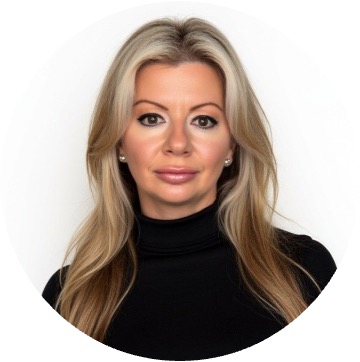
Joining us is Dr. Sabine Hasan, a world renowned gastroenterologist, research author, and one of the leading voices transforming how we understand gut health and its connection to disease, longevity and overall wellness. Dr. Hasan is the CEO of Ventura Clinical Trials and founder of Progenia Biome, a CLIA certified and CAP accredited laboratory at the forefront of microbone microbiome research.
Her work explores the relationship between gut bacteria and conditions including cancer, Parkinson's, Alzheimer's, autism and more. She's led over 46 clinical trials and has spent decades advancing research and stool testing, probiotics, fecal microbiota, transplants, and her groundbreaking concept of reflorization.
She's the author of the best selling book let's Talk Shit and the creative mind behind Save the Biff, helping make microbiome science both accessible and culturally relevant in a way few physicians have done before.
As the first woman accepted into the University of Florida's Clinical gastroenterology fellowship program, Dr. Hasen has consistently pushed boundaries in medicine and research.
Today, she continues collaborating across specialties to better understand how restoring balance in the microbiome may reshape the future of patient care. So we're so excited to have you on the doc lounge. Welcome, Dr. Hasden.
[00:01:57] Speaker C: Thank you, thank you for having me.
Well, tell us.
[00:02:01] Speaker B: I mean, this is a topic that is, you know, I don't think talked about and there's not enough awareness around in general. And you're really the leading voice in microbiome science. So tell us what made you kind of first realize that there's something going on here and it's going to really fundamentally change how we look at medicine?
[00:02:21] Speaker C: I think originally it was kind of like, you know, we all have that gut feeling, right, that there's something in our guts, that there's something we should be eating, that food is health, right?
That exercise is health, that mental health is important, you know, So I think that was kind of, you know, I started medical school by doing a Bachelor of science in nutrition with a minor in nutrition, and then from there went into internal medicine and gi. And GI has a strong focus of nutrition.
I think what interested me more in gastroenterology was really the ability to transform the gut to change the microbiome and therefore improve conditions like clostridium difficile. But not only improving conditions like clostridium difficile, but seeing, you know, what we saw with Dr. Colleen Kelly's work of two patients with alopecia areata that improved and grew hair post fecal transplant, the process of taking stools and putting it into a patient's colon. We saw cases of psoriasis. We saw cases of chronic urinary tract infection.
Doctor at Mayo Clinic showed that data. We showed my own case of Alzheimer's. Dr. Barodi showed a couple cases of Parkinson's, of Crohn's disease improved. So nothing that could be really reproduced or even get us to start a placebo controlled trial, which is kind of the standard care of medicine, right? And science, it was really, you know, n of 1, n of 28, n of 20, n of 2.
And by n, I mean number of patients treated, right?
And so when my n of 1, which was an Alzheimer's patient, improved by fecal transplant, I started asking the questions of, what is going on in the microbiome? What did I change?
Why the wife's poop to the husband, right?
What was in her poop that was so amazing that he remembered his daughter's date of birth, right? So to me, it wasn't about, you know, pushing feces in a capsule. It was really understanding what microbes are at play, what microbes suppress what microbes. And I think, you know, that was my path. It was, you know, I'm not the girl that's easily swayed from a path. I tend to, you know, to run this way.
And, you know, most of us scientists, doctors, we have a vision, a belief. We go that route, right? And then we see the science opening, right? The discoveries, right?
You know, one thing that I have is I tend to be the girl that, you know, when I have a problem, I'm very methodical in my way of analyzing the problem. I don't just go, jump into this. I go, okay, well, I need to do this. This, this, this. It's like building a house. I need to build my foundation. I need to bring in the electrics, I need to bring in the plumbing, and. And then little by little, the house gets built, right? So to me, that's how I look at medicine, right? I look at the problem, not by the problem. Hey, I can take stools and fix it and then make a product out of it. But more, what's the culprit? What's the cause? What's the microbe. Let's go back to the beginning, right? We are born with good microbes. We die with bad microbes. How do we sustain these good microbes? How do we live longer, better with better micro. With keeping our good microbes? So that's really the path that I'm on.
I think for me, what was happening was I was the girl that was doing clinical trials for pharmaceutical companies, and I was known in the world of C. Diff as the queen of C. Diff, because I was recruiting a lot of patients with clostridium difficile, putting them in clinical trials. And then when the clinical trial didn't work, which was a lot of drugs that didn't work, I would do fecal transplant.
And that's exactly what happened to that one patient with Alzheimer's. You know, he came in, joined the trial. We tried fecal transplant, you know, and basically we tried the product first. We tried a couple products for pharma. We tried, you know, fecal transplant of his wife's poop. And then all of a sudden, something happened. So the key in medicine is not to just go. And I think that's what I see. Too many people, too many doctors, they see something's working and then they go jump and call it out, right?
I see something's working. But I'm going to be honest, I don't see enough, I don't understand enough.
I'm still going down the path. I think during COVID it was really the best test for me of who I am as a scientist, who I am as a researcher, who I am as a medical doctor, how do I treat my patients? Understanding the virus, understanding the sequence. We were the lab that picked up Covid in the stools. So we got to see firsthand the sequence of the virus. We got to see what kind of virus it was mutating.
We got to see that the spike was mutating on its own. Therefore, the vaccine was not necessarily the answer.
We got to see what treatment worked. And I got to see firsthand that it wasn't just a one pill fix all.
It was really the art of medicine. It was really figuring out, what does my patient look like? Is my patient young and healthy? If my patient is young and healthy and has never really had any symptoms except this Covid, I don't need to give him much except vitamins, good food, and hasta la vista, right?
The second know, patient that comes in with diabetes or chronic renal failure or, you know, cancer, that's a different patient than the patient that comes in.
So, you know, the idea that we are, you know, we were supposed to just give one pill fits all, you know, remember Paxlovid to all that was just ridiculous. Some kids didn't need much. They just needed some vitamins and some chicken broth, right?
And that's good because their own immunity is fighting the virus, right?
So when I saw all that, when I saw, you know, well, even, you know, the controversy with hydroxychloroquine, the fact that it was working for the severely ill, that we don't have a choice, they're going to die. So you got to give them something to kill the virus quickly. The problem is it also killed the microbiome. And that's why it's so important to keep advancing science and to call a spade a spade. You know, the hydroxy Z pack, vitamin C, D and zinc was my patent. During the pandemic, I could have easily sold it for 10 million or 40 million like they wanted to offer me. But I didn't see the data. It turned out that it was just as bad as giving the shot. It killed the bifidobacteria. So when you have two products that are killing the bifidobacteria, what are you supposed to do? Take medications the rest of your life and keep killing, killing, killing? What happens if that factory is no longer producing hydroxychloroquine? Now you're dependent on a pill that is no longer being provided to you, Right? And so to me, it was more understanding the microbiome, understanding how do we treat a person based on their microbiome signature, right?
Or what I believed was a signature of the microbiome, like a healthy person that never got sick, know, prior to Covid was to me probably has a good amount of bifidobacteria and a good amount of microbiome diversity.
Of course, we need more research, we need more data. So, you know, to make things short, you know, I'm on a quest. I'm on a quest to see the truth.
I'm not. I'm.
I believe that there's too much noise, there's too many people that are trying to make money off of different things and they push a certain agenda.
And I just don't think that that agenda is necessarily the agenda. Now. You know, some people could look at me and say, well, she's pushing the microbiome, right?
Because we need to push the microbiome because we've ignored too much the microbiome. And by the way, my research is all, you know, Sponsored by a nonprofit. So this is something that's passed my life.
You know, when you look at C. Diff, it took 67 years for fecal transplant to be part of the guidelines for gastroenterologists to be able to do fecal transplant for C. Diff.
I'm fixing autism right now in some kids and I'm seeing some n of 1, n of 12, n of 20.
And basically I'm seeing something, nothing that I can just like shout out and say, oh my God, I'm fixing and curing autism. Because nobody could say that, right?
But I'm seeing something.
That something will probably take 100 years by the time it gets approved by the agencies and the American College of GasTro and the FDA.
So we have to be cautious and we have to work together.
Well, we can't just push. We've gone from highly regulated, only approving protocols that are during a pandemic, that are placebo controlled trial, to now no research and anything goes. And everybody's influencing everyone. I'm hearing left and right detox here, parasite cleanse. I mean my mind is blown away because I'm like, what are you talking about?
What parasites? Show me the parasites. Now everybody's going to be paranoid about parasites and they're going to cleanse and, and now they're going to come to me asking me for new stools because they've killed off their microbiome.
Stop, stop the noise, stop the craziness.
Do proper research, analyze everything, call a spade a spade. Stop looking at the price of a stock to bring on a product.
[00:12:50] Speaker B: So that's what I was going to just ask you. So obviously you know that for listeners that are new to this topic, can you explain a little bit about, you know, the micro.
Know biome, micro mic. Microbial imbalance. I'm trying to say it right, that, and that really affects a lot of maybe or you know, so tell us what you're seeing.
[00:13:12] Speaker C: So there's a lot of data out there on what's called dysbiosis. Okay? Some people call it leaky gut, some people call it dysbiosis, some people call it microbial imbalance.
There's a lot of data out there that if you've got too much of a certain microbe, too little of another microbe, you're out of balance, right?
And that could be the beginning of disease.
So we started analyzing, we're doing 66 clinical trials on the microbiome and disease and we're looking really at every disease to see if there's a Signature microbiome in that disease. So, for example, Parkinson's. What does it look like?
Can I recognize Parkinson's before Parkinson's? And I'm laughing and smiling a bit because I had a doctor yesterday who I work with a lot of doctors, and I try to educate them on what I've seen work, what helps and what the microbiome looks like, right? And educate them on what's bifidobacteria, what's Akkermansia, what's bacteroides, all those. Because there's so much that's not written in the books yet.
And, you know, this doctor was about to present to me this case, and I said, you know what? Don't tell me. Let me guess her diseases.
He was blown away because I called out every single problem she had, from her IBS to her anxiety to her insomnia, and he's like, I'm blown away how you could see from microbes that she has, that she has diseases.
And that's my favorite thing to do because in a way, it kind of tells me, you know, I must be on the right path if I can guess the disease from the microbiome signature, right? But it is exactly that. It's a signature microbiome.
What's beautiful about that signature microbiome is that it tells you, for example, the newborns have a lot of bifidobacteria, right? Now your kid is born with zero bifidobacteria. You start paying attention, right? You start going, is this why they're not responsive as well? That's why they're not speaking?
You know, on their typical milestone, you start looking at our data, which is basically looking at kids with autism showing that they lack bifidobacteria compared to their siblings that are neurotypical compared to the healthy young kids.
And you start seeing, wait a minute. Bifidobacteria is really important in autism, right? So that's that signature.
It's like a person is bleeding, and you check their hemoglobin, and there it's six. You know, those people are going to have a heart attack, so you have to give them a blood transfusion. How did we get to know that? We got. We had a signal. We had a mic, we had a marker, which was the hemoglobin that told us. Then we did, you know, other doctors started doing more studies and said, hey, you know what? The hemoglobin is at 6. We need to transfuse at 12. We shouldn't transfuse if the patient bleeds. What Are you doing?
You're giving blood now? What did we discover when we gave blood?
We gave hepatitis C, we gave hiv because blood had viruses in there, right? And there's a ton of viruses that we don't know still from blood transfusions.
So we got to learn little by little, right, that a blood transfusion was the answer.
And then we got to learn that if a patient was bleeding and you gave them a blood transfusion and they stopped bleeding, then you were done with your workup, the patient just stopped bleeding. Like in my. In my world, in gi, patients come in with a bleeding ulcer. You know, we put them on medications, we give them blood when they need a blood transfusion, and then we observe. If the patient is hemoglobin stabilizes, then we don't need to do an endoscopy to coagulate the blood vessel that's bleeding, right, or the ulcer. So it's the same thing in the microbiome space. We don't have a marker yet in the microbiome space that basically can tell us with certainty whether we can implant poop or not. So we're trying to, like, push the poop pills without understanding what's in poop, what microbes are good in poop, what microbes are bad.
Should I be giving a microbiome of a Mexican to a Chinese? Different diet, different microbiome? Is that really the right thing to do?
So we're really early in this path.
I'm excited because I see hope, I see something right, and it's something that, you know, I see with autism, I see with Alzheimer's, I saw with Alzheimer's, you know, I see with mental illness. I'm excited about that.
But it's not something that I can say, oh, my God, I figured it all out, and this is it, right? So there's a lot of work that needs to be done.
This is not of my lifetime, but I hope that I'm remembered as the girl that pushed that signs, that pushed that train, because it needs to continue, and it needs good people that are righteous, that are not going to be bought out to basically sell their soul, you know, because at the end. And cheat science in a way. Because at the end of the day, you know, if you're cheating science, you're cheating yourself.
You're not figuring out, you know, you're not figuring out how to live longer, right? You've just taken the shortcut to cash out some great money. But then at the same time, you know, you're not figuring out the Big, you know, the Holy Grail, right? I mean, to me, this is the Holy Grail.
[00:19:07] Speaker B: Well, and I appreciate you sharing all of your, the research and all of the, what you've found so far to date. And it sounds like this is just the tip of the iceberg. But I want to, I want to give you the opportunity to talk to us a little bit about reflorization.
What exactly is this? And I know this is something you really developed. So tell us how you see this being, you know, moving the needle in the future. Preventative medicine.
[00:19:33] Speaker C: So I think the process of fecal transplant, putting feces into people, what is it doing is it's putting microbes into people. Microbes that you're lacking because you've lost that diversity because you've killed your microbiome with so many antibiotics. So what is the microbiome? It's microbes in your gut that are in your poop that are essentially doing something. They're breaking down food so that you can absorb that sugar. They're breaking down, you know, food so you can absorb the calcium. So it's almost, you have to think of it as a compost bin where you put in the green vegetables and the, you know, rotten food. And then bacteria starts building up, eating the greens and then becoming this black dirt. Right.
So your poop is essentially that compost. Right. That your body has kind of created, removing some of the microbes, etc.
That's what we are. We're a composting farm. Right. Essentially we're a reservoir for these microbes. These microbes allow us to function. They allow us to do what we need to do for the planet. But essentially we're just a reservoir for them.
So the process of changing that reservoir. You're born with bacteria A, B, C, D, Z. Right? Right. And then all of a sudden, you know, you kill off abc.
You need to replenish that ABC somehow.
So the process of fecal transplant was really that. How do I get ABC from my donor, give it to my, to my patient who's lacking abc. Right.
The problem is that there's, this is early science. There's. The concept of it is right.
It is, in my opinion, can be dangerous because we don't know the long term effects. So, you know, the same thing that changes a personality like a person gets a fecal transplant and gets anxious and it was happy before and now is anxious because the donor was anxious and you gave them microbes that were super high in that anxiety. By the way, we published on the microbiome of anxiety patients. There's a signature microbiome there. There's a signature microbiome for bipolar disorder.
So imagine you're giving the stool of a patient that's anxious to a patient that's happy. Now they're anxious, you know, jumping up and down.
There needs to be a better informed consent of what we're getting from the donors. Right. So in other words, is my patient suicidal? Maybe my patient was suicidal, but they didn't want to tell the pharmaceutical company because they wanted to make their $500.
Maybe my patient was bipolar or, you know, a drug addict, but they didn't want to tell again because they're making that $500.
So, you know, there's a lot. The problem is we've put a price on poop in a way.
So people will do anything for money, you know, and some people, not everybody, but some people will do a lot for money. I remember people trying to come to join clinical trials for psoriasis, getting an injection every week, pretending they had psoriasis, just to get paid the $2,000 that the company was paying them to participate in the study.
So, you know, we have. It's very difficult to do good research. It's very difficult to do, you know, unbiased research. So to me, what was important was not really the, you know, taking stools from a healthy donor, because, let me tell you, there's a lack of good donors out there. Out of 4,000 samples, I think I can tell you four of them are adequate. That I would say, yeah, you know what? I would use those for my donors. So, you know, when people come to me for fecal transplant, I always say, who's your donor? Because that's the problem, right? Within a family, you share microbes. Even, you know, familial fecal transplant, which is the taking stool samples of your grandchild, of your kid. You know, it's not necessarily the answer because unfortunately, you share microbes in the family.
So often a kid has autism, they share microbes with the rest of the family. So the kid has autism, the other sibling has adhd, the mom is anxious, the dad has diverticular disease.
So it's all kind of those microbes are doing something to each member of the family. So I think we need to start realizing that microbes are shared.
So to me, it's not necessarily about swapping microbes and fecal transplant and playing with poop, which is not my favorite thing to do, but it's really about the refloralization process is really what does nutrition do to the microbe.
What does bifidobacteria like to eat?
How do I increase bifidobacteria in the gut to make it grow?
How do I make sure that there's nothing that I do to kill it? Right. So it's really the science of understanding how to be resilient, how to support the microbes to make them better.
So you're missing a bunch of microbes that help you break down vitamin B. You're going to be dropping your vitamin B, need to supplement that vitamin B. You're missing microbes that are, that are absorb. Helping you absorb sugar. You know, your bifidobacteria. You need to increase the bifidobacteria. So we discovered vitamin C increases the bifidobacteria.
Sorry.
So, you know, there's a lot of
[00:25:20] Speaker B: things that are linked. Well, I was going to just ask you, are there certain things that you recommending to your patients that is damaging their microbiome or things that they can do to support a healthier microbiome?
[00:25:31] Speaker C: Yes, there's a lot of things. We work with patients, first of all, we look at their microbiome at a research level and we tell everyone this is a research tool. It's not really science that's approved by any associations or medical group.
So this is really the beginning.
We show them what we see and then we start working with certain things. You know, so one of the things that I'm very big on is, you know, the whole nutraceutical. And there's a. There's a benefit to the nutrients, right? The vitamin C, the vitamin D, the vitamin B, the zinc, the copper, the selenium. So it's all about, like, where are you at in your, you know, nutrition, Right.
So we monitor that. We monitor the microbes that are supposed to break down the vitamin B, the calcium, the sugar.
We replenish, we try to work with different. So we're very big on.
I'm very big on testing products. Okay.
I find that there's a lot of products out there. You know, you talk about vitamin C, there's a lot of vitamin C that have arsenic in there, There's a lot of chocolates that have arsenic in there. So I tend to be, you know, I mean, the list is enormous. If I told you, you know, I've been the guinea pig during the pandemic. So I have about 300 stool samples of myself. I can tell you that. I test everything. You know, I'm friends with Miranda Kersh. She has a line of products Kora Organics. And before I started putting it on my face, I, I tested that, right, to make sure it's safe on the microbiome. It is.
You know, so there's a lot of things that I do that are basically, you know, and it is preliminary. Obviously we need to do more studies, et cetera, because in some people it can affect them, et cetera. But, you know, we need to look at products and have more transparency in the product, knowing where those products are from, what they're doing. It's kind of like right now it's a crapshoot, right? You go to a pharmacy, you think you're taking probiotics because it has bifidobacteria on the back. 16 out of 17 products on the market that say bifidobacteria do not have bifidobacteria in there. Our own study looking at 23 yogurts showed that out of 23, three of them had bifidobacteria. That means 20 is blinding, is basically lying to the consumer and saying there is a bacteria when there isn't. Right now it doesn't mean that the yogurt itself may increase the bifidobacteria. But the fact is, if you're putting a product in there, you need to tell the consumer and there needs to be a way to test that product.
So, you know, I kind of became, because I saw all this, I started, you know, developing my own protocols of refloralization essentially, and developing my own products and putting them under my, you know, we have a four page protocol that we give patients. And I basically circle, you know, you should take this, you should take that, you should take that. But I've tested all those products for them to be given. Because here's the thing, if you're telling a patient, take vitamin C, but then they take vitamin C from cvs, okay? And it's not tested and there's, you know, whatever in there and they're not improving. Well, it doesn't matter that my 23 patients improved on vitamin C. Their bifidobacteria, they're not improving because there's something either on the capsule or in the product to preserve that product that kills, that destroys the vitamins, that may not destroy the vitamin C, but destroys the microbiome.
So it's very important to have clean products. Okay? Now when I started this, I was, you know, I, it was so important for me to be, buy the book and not appear like I'm selling vitamins or selling products. So I actually created A nonprofit. And the nonprofit basically houses all these vitamins. And any profit from those goes to the foundation, continues to support research.
So these products are really there to help with the research. So we can continue research on them and say, okay, and then I test them. But also it's my go to, right?
When I tested 23 yogurts, it's not that I was like on, you know, on a path to destroy companies.
In fact, I never tell people what are the three yogurts and what are the 20 that were lying. I want the company to be legit. I want to be the voice that says, hey, I'm watching. And if you want me to refer your yogurt to my patients, then make sure that there's bifidobacteria in that yogurt.
So I tested not for, you know, to bust the companies. I tested to basically make sure that my patients, you know, I'm a Malibu physician.
I need my patients to get better.
And my patients are unfortunately or fortunately the high rollers. They, they're jetting, you know, the world. So I need to get them back to what, to their lifestyle.
So I cannot afford to tell them to drink a kefir. That's not going to do anything for them and possibly could cause them worsening, Right? So it's very important to test everything, you know, and not just be a salesperson of products, right? So I think that's. At the end of the day, the refloralization process for me is about realigning the gut with good nutrition, good tested
[00:31:34] Speaker B: products,
[00:31:36] Speaker C: good farming practices, good regenerative farm practices, and then educating my patients to de stress, to decrease their stress level, you know, because if they're coming to me every six months sick because they're flying all over the world, well, guess what? At some point, when does it become enough money for you to stop what you're doing? Right? I mean, you know, I've got these billionaires, like, how much, how many billions do you need to slow down because you're speeding up towards your grave.
So, you know, I think we need to have that balance. You know, I'm very big on balance where I know some weeks I'm stressed like crazy and then I'm going to force myself to take that week to put my feet in the ground, go to the beach, go gardening, do whatever, painting, you know, ceramics, fishing, whatever gets me out of my world. So the one thing I encourage all my patients to do is if you're a high achieving personality, slow it down, calm down, right? You can't you know, sleep a lot, right? So I sleep a lot. I love my sleep because sleep is the moment where the body just stops. It realigns itself. It, you know, your mind is rested and it's going in another zone. Right. So I think it's important. Sleep, prayers. I'm very spiritual, you know, good nutrition and worrying. Being a warrior, I think stopping the fear. I see so many people dying because they make the wrong decision, because they function out of fear. And that's what we saw during the pandemic.
Fear controlled the world.
People were afraid of a virus.
I was fearful at the beginning, I'll be honest. And then when my first patient was treated that had copd, chf, had a bypass two weeks prior, and he was safe from COVID I said, well, if this guy's okay, I'm going to be okay. And then I started trusting God, you know, and believing in a higher power.
And I think that's what really pulled me through. It was really that sense of, I'm on this path to understand the microbiome. I'm going to stick to this path and I'm not going to be stressed and I'm not going to be fearful and I'm going to trust whatever comes my way.
[00:34:05] Speaker B: I love that. Well, tell us, Dr. Hasan, where can we get your products or your recommendations? I know you have a book, I know you have a foundation, but tell us more about that.
[00:34:15] Speaker C: Yeah, so my book is let's Talk Shit.
The foundation is the microbiome researchfoundation.org and I encourage everyone to just go on the progenabiome.com website where they can see your podcast and my social media. I'm on Instagram and X where, you know, basically they can educate themselves.
You know, going to the products is not really the answer because really everybody has a specific microbiome signature.
What I hope to do in the future is basically develop that marker per disease, so, you know, companies can start using that. You know, my interest is to work with companies to basically bring good products to the market and to test a product. You know, when we did the Biome Booster plus, which is bovine immunoglobulin, we worked with the company to. To showcase what it did to the microbiome, that it increased the bifido, that it decreased the bacteroides, that it decreased the proteobacteria, increased the diversity. If you're that person that's low in basiata, low in bifido, high in bacteroides, well, that's what I believe could Help you, especially if you're having diarrhea, ibs.
But this is again, research, so we published on it.
But essentially there needs to be more research. But we worked with the company that's developing that and we're happy to give it to our patients. When we see that formula and we say, you know what, you have some of the criterias that I've seen with other patients. Let me try that. Because really, refloralization process is the art of medicine.
I see we're heading into a world of robots. And believe me, I was in the hospital the last three weeks with patients and I can tell you, robots are coming rounding. And I literally. There's a post of me on Instagram of a robot, and I said, are you my replacement?
And I think there's going to be a role for robots, right? The nursing stations, you know, they're short staffed. The. The nurses are going to need robots to help them because there is a short staffing, there's a short. There's a burnout in the doctors. So we can train robots to do what we're doing, you know, to evaluate the patient, to, you know, take the history to. There's certain things in medicine where robots will be helpful to the doctor. But I think we cannot lose the art of medicine. We cannot lose. You know, my function as a physician is not just to be a robot, because anybody can do colonoscopies, right? A robot could probably do a better colonoscopy than I can, but my.
Oversight of the robot is really my experience.
How does the polyp look like? Does it need to be taken out?
Is this a diverticuli, a pocket, or is it an inverted.
Is this a polyp or is this an inverted diverticuli? And therefore don't touch it because you might perforate. Right? So there's so many things.
And then in the microbiome space, it's really, you know, instinct. It's human, you know, I think part of the reason that I think I was perfect in a way for this role is because I've done hundreds of clinical trials for pharma so not only am I practicing within the guidelines of medicine and gi, but I've also done hundreds of clinical trials in GI on Crohn's disease, ulcerative colitis, C. Diff. And then in non gi, psoriasis, cardiac disease, Alzheimer's, acne.
So I'm previewed. I've been privy to a lot of protocols over the years that have formed my brain to say, oh, this is how it works. Wait A minute. We're trying breast milk for C. Diff.
So what is breast milk doing for C. Diff? Is it. And we know C. Diff is a loss of diversity in the microbiome. Is breast milk possibly improving diversity? You know, we're doing PRP with platelet rich plasma. Some doctors are using it for the face, you know, I mean, for, you know, improving the face. Right.
What is that doing to the microbiome? Right. What is that doing to decrease inflammation?
You know, somebody talked to me today about peptides. You know, peptides, yes. There are some people that are doing amazing stuff with peptides, and they're working great for those patients. But what happens when a healthy person takes peptides? Is that not dangerous for them? Are we offsetting their balance?
So we. This is why we need to do the research. And I think, you know, my involvement in the microbiome space. Yes. I'm going to have, you know, robots and I and, you know, AI Try to help. But AI Is limited because AI is only as good as what you feed it. And right now, AI is completely in the rabbit hole in the microbiome space because I could tell you that 90% of the papers out there, I cannot reproduce. When somebody comes out and says, MS, is this microbe. And I have 100 samples of patients with Ms. And I look at their stools and I go, no, I'm not seeing this microbe. And literally, you'll see my tweets. I'll say on X and I'll say, go back to the lab, guys. You know, I'm not afraid to call a spade a space, to call out something. That doesn't mean I know it all. But the fact is, good research needs to be valid, verified, and reproducible. If I cannot reproduce your data, there's a problem there. It's especially if I'm using the same exact protocol. Now, the reason I say fecal transplant is very early in the game is because when you look at cases of Colleen Kelly where people lost hair and she did fecal transplant and they had two of them regrew hair, that data was not reproduced. When you see Dr. Barodi fixing 28 patients with Crohn's disease, that data was not reproduced. And the reason it's not reproduced is because, in my humble opinion, is because of donor selection, we have not figured out the microbiome. So you want to start. You want to push the pill, poop. You got to start understanding the microbiome. And that's what I'm trying to do. And that's what I'm trying to bring pharma. You know, someone said at the National Institute of Standard, you're shaking the beehive of pharmacists. And during the pandemic, someone said to me, oh, my God, you're going to get killed. You're going against pharma. I'm not going against pharma. I worked with them for like three decades practically. I don't necessarily like pharma very much, but I, you know, I have a good relationship with them that I tell them like it is and they know who I am because I can be a nag to the max, especially when a drug is not going the right way, as I see it with my patients. But I'm here to bring pharma to the microbiome. I'm here to say, hey, guys, start looking at these signals that I'm seeing.
And yes, you have a drug that's working, but what is it doing long term? What is it doing to the microbiome? I'm very excited because the people that have come to my path are actually not the pharmaceutical companies, which in my opinion is a big mistake.
It's the companies that have been completely outside the pharma world. It's the technology companies that are basically seeing something, a tool to look for inflammation that is completely different than what we used to.
And together we can see improvement of the patient. Me with the microbiome, space, them with their technology.
And it's also people that have natural products, you know, people that have farms, people that have a yogurt, they want to push a drink, they want to push a vitamin, they want to push a cream, they want to push, you know, so it's one thing to have, you know, transparency. And by the way, I'm drinking from this, which is the, you know, environment Working Group cup.
You know, they're doing a great job by testing all our products. Right.
But what are those products doing to the microbiome? It's one thing that they're safe for the environment.
What is it doing to our microbiome? That's the next step I want to get into.
I'm all about the environment. I'm all about protecting the planet. I'm all about the future for our kids. I don't have a kid with autism. And I spent a lot of money on my protocols for kids with autism, mainly because somebody needed to. Right?
[00:43:06] Speaker B: Right.
[00:43:07] Speaker C: What if my great grandchildren are autistic in a hundred years from now and I'm not in this planet?
I'm always seeing ahead, you know, past my life. I also believe that, you know, this life is not just the end. I think, you know, there's, you know, souls come back. And I think, you know, my soul is that of a warrior. I'm sure I was a warrior in previous lives.
Not to sound like, you know, I'm off, but I think everything in life, in the planet recycles. Why not souls?
And I think we all have some strong feelings of deja vu of something there's so much we don't know.
And to say science is settled is wrong. It's arrogant. We need to be more humble. We need to push the real science. And so projetabiome.com is where you can find me.
And let's heal the world together and let's come together and stop the divide. Because I think the divide and the stress of the divide is what kills us.
[00:44:15] Speaker B: Well, thank you so much, Dr. Hasan. We will share all of those links with our listeners and this has been really, really a very eye opening talk and I'm so glad we got to talk to some leading this whole space and really pushing the boundaries. Thank you so much for your time.
[00:44:34] Speaker C: My pleasure. A pleasure. Thank you.
[00:44:37] Speaker A: Thank you to all of our listeners. If you would like to be notified when new episodes air, make sure to hit that subscribe button. And a big thank you to Pacific companies. Without you guys, this podcast would not be possible.
If you would like to be a guest, Please go to www.pacificcompanies.com.
[00:44:55] Speaker C: thank you. You.