Episode Transcript
[00:00:01] Speaker A: You're listening to the Doc Lounge Podcast. This is a place for candid conversations with the healthcare industry's top physicians, executives and thought leaders.
This podcast is made possible by Pacific Companies, your trusted advisor in physician recruitment.
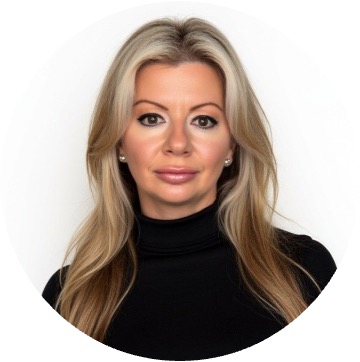
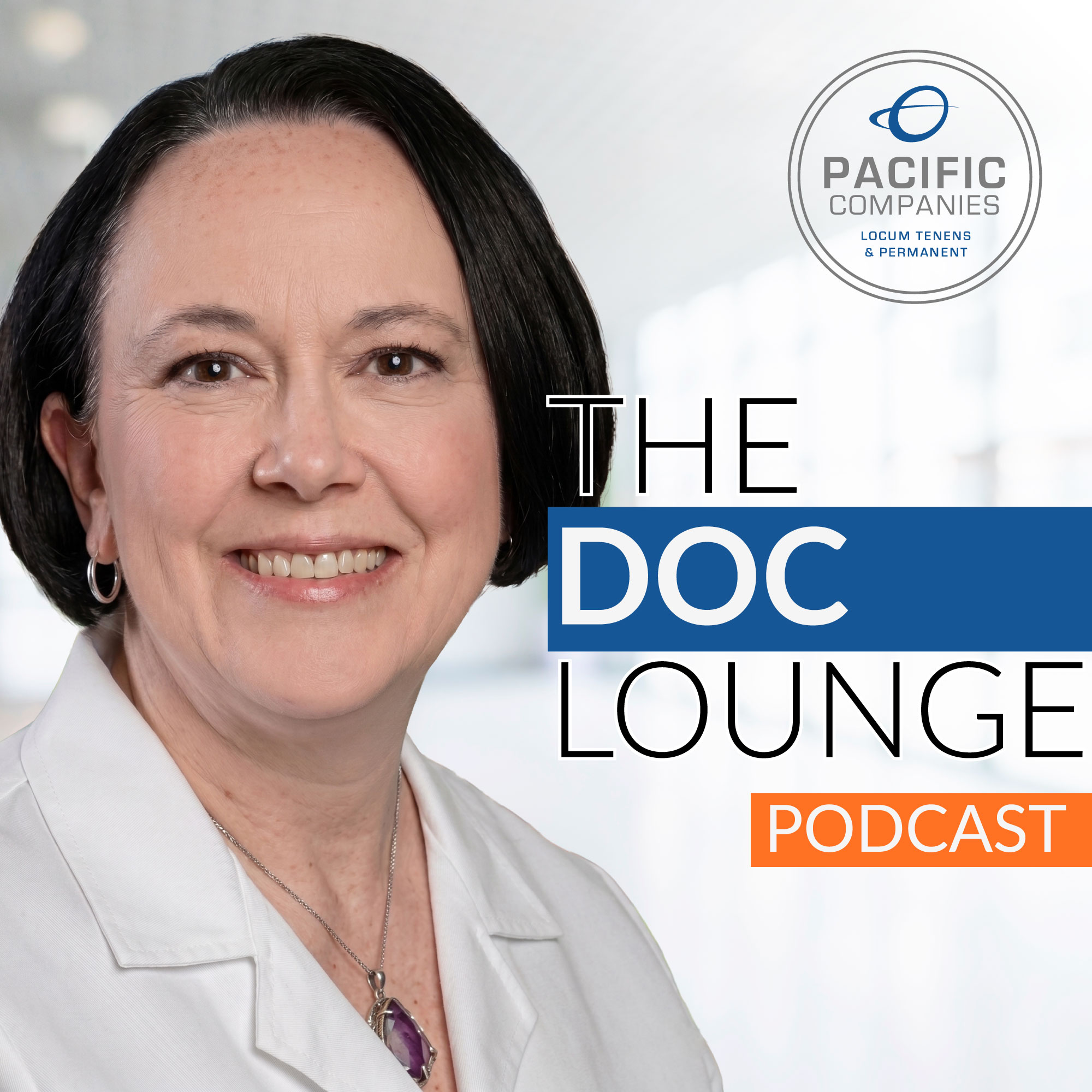
[00:00:20] Speaker B: Welcome back to the Doc Lounge Podcast where we bring you real conversations with physicians and healthcare leaders shaping the future of medicine. I'm Stacey Doyle with Pacific Companies and today I'm joined by a guest who is truly making an impact in women's health. Dr. Kathleen Cat Brown, also known as Dr. Kat, is a board certified OB GYN with over 20 years of experience.
She currently serves as medical Director at Winona where she's helping lead the way in menopause care and hormone health through a modern telehealth driven approach.
In addition to her leadership role, she continues to care for patients on the labor and delivery team at Abington Jefferson Hospital.
Her career began in the US army where she completed her residency and went on to serve for 12 years caring for women across military communities nationwide. Dr. Kat is passionate about empowering women through education and access to care at every stage of life, and we're so excited to have her on the show today. Welcome to the Doc Lounge Podcast.
[00:01:21] Speaker A: Thank you so much for having me. I'm happy to be here.
[00:01:24] Speaker B: Well, you, I mean, you really have a unique journey and that's. I was so excited to have you on as a guest today. You went from serving in the US army and now you're really leading the way in telehealth. So tell us a little bit about how maybe your initial military experience shaped how you're practicing medicine today.
[00:01:43] Speaker A: Yeah, absolutely. Well, so I joined the military mainly to pay for school. You know, I came from a blue collar family where there was no college fund and, you know, basically discovered that getting an army scholarship could help pay for college. So I did the ROTC scholarship and then also end up doing the health profession scholarship for med school as well.
And that was really, you know, to how I got my medical education without getting a slew of loans. But the nice thing about working in the army is that you really learn versatility, you learn resilience.
I trained in Hawaii. That's where I did my residency, which was not a hardship at all. Whenever I was out of the hospital, I prevented, I pretended like I was a tourist, but it was great. You know, you get to work with people from all over the country every, you know, from every walk of life.
And the nice thing is taking care of female service members and then also, you know, spouses of military service members. We Took care of all the services. So Army, Navy, Air Force, Marines, Coast Guard, even when I was in Hawaii. And then I traveled to Texas and then North Carolina. So I've kind of bounced around the country working in army bases. And what you learn is that you do the best with what you have. It's all about doing the best thing for the patient and really figuring out what's best for them and partnering with them in their care. But I think that that experience and that training kind of helped me just be more versatile and be able to change my practice based on the needs of my patients, I think, which is important, especially as medicine is ever evolving and changing.
So. So you know, that, that training was, was really invaluable.
[00:03:24] Speaker B: Well, tell me what made you interested in your specialty? Obviously, as an OB gyn, we have a lot of, you know, residents or, or fellows listening. What made you say, hey, this is what I really want to focus on?
[00:03:39] Speaker A: Yeah, my, my medical school was really trying to kind of encourage all of us to go into primary care.
I'm an osteopath by training, so I'm a D.O. instead of an M.D. and I went to Philadelphia College of Osteopathic.
And so despite, you know, my best efforts to try to love primary care and try to be like a family physician or a pediatrician, no matter what rotation I was on, because the first two years of medical school are all didactic and in the classroom, and the second two years are all hands on doing like clinical rotations.
Everywhere I looked, I kept gravitating toward women's health. And so many women in my life had had very negative experiences with GYN exams or their first exam, myself included. You know, it's, it's kind of a scary path that we have to take as women.
And so for a long time I really was pushing against and didn't want to do it. I knew the lifestyle was bad, but no matter what I tried to like better, I just found like, I was naturally gravitating toward OB gyn and I felt like a deep calling to make it better and to kind of change that tide for women who had had negative experiences in the past. So, you know, that was really the inspiration for doing it. And somebody told me advice when I was a medical student that you can't pick a specialty based on, you know, the people or the workplace. Like, you have to think about when you're sleep deprived, when you're hungry, when you're feeling awful, do you still love what you do? And if you do and you answer yes, to all those things, like that's the specialty you should go into.
And that was, you know, hands down, every time it was OB GYN even it was 2am in the morning, you know, waiting for a baby to deliver.
I loved it. You know, it was, it was wonderful. So that's, that's what really inspired me to do this.
[00:05:25] Speaker B: Well, that's inspirational and really great advice for anyone that's, you know, trying to determine which, which specialty to go into.
And it sounds like you kind of have a natural fit and feeling and you were smart enough to obviously keep going with that. So now tell us a little bit. So I know one area that you're really focusing on right now is menopause. And I think this is an important one because I don't think it gets enough attention and it's really, you know, it still feels underserved. So what do you think? You know, why is it being overlooked for so long and what are some of the trends that you want to let us know about?
[00:06:02] Speaker A: Yeah, I mean, I think it was overlooked for a long time just mainly because of the negative press that the Women's Health Initiative study got in the early 2000s.
And also just, you know, as a population, women's health really hasn't been given as many research dollars. I. You look side by side looking at men's medications versus women's. There's far more medications for erectile dysfunction and so many, so little or less innovations for women's health. But really I'm part of a growing population of female OB gyns who ourselves are getting into midlife and starting to experience symptoms and feeling really ill prepared. Even though we're board certified obstetricians and gynecologists, this is our specialty.
We felt like ourselves as patients, we didn't have the tools and the things that we need to really, you know, help ourselves. And so we felt like this was a really, you know, kind of a care desert, you know, so to speak. And there have been OB GYNs out there and primary care doctors who've been practicing longer than me that felt very comfortable with hormone therapy. But really the generation that trained in the early 2000 and late 90s really was skewed away from really making this a priority. We were all taught like, hormone therapy is dangerous, it's going to cause breast cancer. There was all these fear mongering things and it really wasn't given the attention that it deserves. And I think that the nice thing is now the dialogue's happening, the FDA is changing Warning labels on HRT more and more, you know, people in. In the media and, you know, out there and, you know, the stars are basically talking about their own experiences. So the dialogue's opening, and women are changing the tide, demanding better.
You know, and many of us in our professional lives, it can make a huge impact on how we feel we're performing. You know, the brain fog of perimenopause and menopause can really affect our work life balance, but also our, you know, our confidence at work. And so I think it's so very important that women feel empowered and get the education that they need, you know, to really seek the care that they need, to feel better.
Because we're not. We're not the generation like our grandmothers, that we're gonna age and. And wither away into elderly life as a little old, decrepit women. You know, we're gonna. We want to age with vi and we want to be functional and we want to continue doing great things.
You know, thinking about, like, the. The generation of women, you know, in our 50s. In the 50s. You know, women in their 50s. You think about the Golden Girls, you know, they were, like, supposed to be in their 40s and 50s in that show, and you look at them now and you think, well, no, that should be their 70s. You know, we're, as a population, women now are aging differently, and we're. We're demanding better. You know, we want to be stronger as we age.
[00:08:52] Speaker B: I love that and couldn't agree more. So tell us a little bit. Now, obviously, you're the medical director at Winona, and that's helping. Obviously, you're bringing awareness. Today we're talking, which is amazing.
So tell us what are some of the benefits if a woman was to go on. On hormone replacement therapy and kind of tell us some of those misconceptions.
[00:09:17] Speaker A: Yeah, absolutely. So, I mean, first and foremost, hormone therapy is, hands down, the best treatment for the symptoms of menopause. So those classic hot flashes, night sweats, brain fog. But the health benefits and the preventive health benefits are so numerous. So keeping our bones healthy and strong to prevent osteopenia and osteoporosis, keeping our heart healthy, our blood vessels healthy, so we're twice as likely, if not more likely, to develop heart disease and coronary artery disease as we lose estrogen from our system. So if you don't supplement with estrogen therapy, you're more likely to suffer from heart disease and a heart attack later in life.
Also, there's evidence out there that taking hormone therapy Also can prevent cognitive decline too. So it's integral in our brain for our cognitive function, our memory.
And one of the symptoms that a lot of women suffer from as they're starting to decrease their estrogen levels with aging is brain fog.
You know, difficulty multitasking, prioritizing. And so taking hormone therapy can really help to combat that too. But also our muscle maintenance, our strength, our vitality, and also just other things like, you know, skin turgor and quality our sex life. So very important.
As we lose estrogen, our vaginal tissues don't respond the same way and we develop dryness and actually atrophy. Like we can lose the landmarks of our genitalia and actually lose our sexual function as our body ages and as we lose estrogen. So hormone therapy can help with all of that tremendously.
[00:10:52] Speaker B: That was very informative. Thank you for giving that great overview. And I know a lot of your work, obviously, you know, at Wynonna, is around how you can change access to care. You talked about, you know, the care desert that women have been experienced around this topic so long.
So where do you see telehealth coming in? How does, how is that helping, you know, increase access to care for, for women?
[00:11:18] Speaker A: So really, telehealth really helps to bridge the gap in care. So for, for women who have an in person doctor who's menopause trained and feels comfortable, that's fantastic. And we hope that more and more doctors are going to expand their practice to be able to offer this service and this care to their patients. But companies like ours, like Winona, and there's other companies out there as well, really help to reach those patients who don't have access to a doctor in person. Or maybe they've gone to their primary doctor or their OB GYN and they've asked for help and they've been told, well, this is just natural, this is a normal part of living, you're just going to have to suck it up.
And so we exist for those women who have no other alternative.
And I've had so many patients over the years that have been at Winona that have started treatment with us, and then they go back to their in person doctor and their in person doctor sees how well they're doing, starts to see all these health benefits that they're seeing and sometimes they come back to me and they say, you know, my doctor's willing to prescribe now. They see how safe, how great I look and how things are. And they did some reading and I think that's a win because if we start to change the hearts and minds of more providers out there and more doctors out there, then more patients, more women are going to have access to the treatment that they need when they seek it.
But that's really the bridging the gap and the access to care is the main thing.
[00:12:36] Speaker B: Well, it sounds like obviously the proof is in the pudding, as you would say. And when these physicians are seeing how great their patients are responding to the therapy, then they are becoming believers in that. And so I do know a lot of our aud, our, you know, other fellow physicians. So tell us, if they don't specialize in menopause, you know, care, what are some things that they're, you know, missing or maybe under treating in their patients that you would want to flag so that they can pers getting better care?
[00:13:06] Speaker A: I mean, probably the easiest thing that doctors could do right now that's so very safe that can change the life of their patients. Even if you don't feel comfortable prescribing systemic hormone therapy, local vaginal estrogen for women to help prevent recurrent urinary tract infections, to prevent that genitourinary syndrome of menopause. You know, there's many of us in this field that really feel like estrogen cream vaginally should be available over the counter because it is so safe, even for patients that have had a cancer history, they can use local vaginal estrogen cream. So that's a very quick and easy practice change that you can make.
And if you're interested in trying to incorporate more, there are so many opportunities to add this to your repertoire of, you know, treatments. You know, the Menopause Society offers a Menopause 101 course every year as part of their, their yearly conference. So doctors could attend that to get the basics. I think Harvard Medical School offers a menopause course as well.
But just if you want something free and easy that you don't have to pay for. On our site, we have a lot of educational material that's meant for patients, but really available for anyone that's free to access. That's all about, you know, it's all educating on symptoms, treatments, and to get you at, you know, core basics as far as, know, learning what you need to know. Because it's hard when you're in practice and trying to juggle, you know, seeing patients, taking care of things, but also trying to add to your own education too.
So there's opportunities out there to do that, you know, to get the mentorship and to get the education you need. But At a basic level too. Find out who in your area where you're practicing is comfortable so that you can really, really build a referral basis too. Because if you don't have the time to incorporate it into your practice and say your primary care, it'd be nice to give your patients a couple names of people that you know who do this well and it's, it's their forte because then you're really doing your patients good by giving them someone that can really help them too.
[00:15:04] Speaker B: Fantastic advice there. Now, Dr. Brown, where I know you said some of that information that you have available, where can physicians or patients find that? Is that through the Winona or.
[00:15:18] Speaker A: Yeah, on our website. So our website is www.bywinona.com and there's a drop down and I think the drop down is called learn. And you can basically search by symptoms, search by term, by, you can learn all the basics about definitions, but there's, there's medical journal articles on there that have been written and they're all curated by me and our chief medical officer and a couple of other physicians review them for content too, just to make sure it's all medically accurate information. And that's a great place to start, to just kind of start your journey and learning more if you haven't had the education. Because on average, I mean, they've done research, studies and the average medical student coming out of medical school as a brand new physician maybe has gotten one hour, two hours of menopause training in the four years they've gone to medical school. And unless you've gotten more than that, like on your clinical rotation and ob gyn, you know, that's the basic amount that a lot of doctors are coming out of med school with. And so most residents and young doctors in practice feel like they haven't gotten enough education on this. And so hopefully in the future med schools will start to incorporate more and more as this becomes more of a demand in practice.
But for now, doctors have to take the initiative to go out there and kind of seek the education on their own so they can add to their skill set really well.
[00:16:40] Speaker B: And that's why I'm so impressed by you and all that you've done. Because obviously balancing clinical care and being a leader is not easy and you're staying connected with your patients, but you're also trying to, you know, drive the strategy and innovation of the Telehealth company as well. So tell us, how have you found as a leading physician, how do, how do you balance that?
[00:17:03] Speaker A: Well, it's really about trying to make sure that, you know, I'm giving the best that I can in all those arenas, you know, even at my clinical job in person. Like, I, when I work at the hospital, I'm working on labor and delivery, but I'm working with residents. So when we have downtime and when we have time in between deliveries and in between ER consults, sometimes we're talking about menopause. And I'm doing some training, like kind of, you know, off the cuff with them as well, just so that, you know, they get more than what I got when I was a resident and, you know, doing podcasts like this, trying to get the word out there.
I also have a professional Instagram that we've. We've got a, you know, a crew at Winona that helps me manage that as well, just to put out educational content for patients, you know, and I never really dreamed to be, you know, one of those, like social media guru doctors necessarily.
But sometimes the people that are the biggest ones on social media, they may not resonate with the patient. So maybe a patient out there will find my little page and find out, you know, that maybe she understands the way I explain things a little bit better than say, another social media doc or something like that. So it's this little opportunities for connection to be able to reach a patient, you know, and I think that, you know, just trying to find the best way to do that, but also fitting it into your life too. Right? So life is more than just work, you know, and even though we're physicians, you know, we also have to find balance with home too, because we don't want to burn out.
You know, that's a real, A real issue in medicine.
And, you know, I find that I have to balance my work life with my three kids and with my hobbies too, and making sure I'm doing that my own self care. You know, we have to practice what we preach, you know, making sure we get plenty of sleep and making sure that we, we do things for ourselves to counterbalance the stress of work and things like that too.
So it's, it's a dance, you know, that we have to do for sure.
[00:19:01] Speaker B: Well, that work, life balance is very hard. We know this for physicians. We talk about this a lot on the podcast. Don't. What is your Instagram handle? Because I know.
[00:19:11] Speaker A: Oh, sure.
[00:19:12] Speaker B: Following you.
[00:19:13] Speaker A: Yeah, it's Dr. Kat. OB GYN.
[00:19:17] Speaker B: Nice. Dr. Kat. We like that. Well, Dr. Kat, I'd love just to kind of wrap this up and tell us what are you most excited about, you know, for the future of women's health, obviously menopause being specific, you know, topic that you're obviously very passionate about.
[00:19:32] Speaker A: Yeah, I'm, I'm most excited that, you know, with the FDA removing their black box warning from vaginal estrogen especially, I think that that going to really change the lives of women.
And I think that the more that's out there and the more that's available for women and the more that they learn, this is only going to get better for generations to come so that our daughters, you know, are not going to suffer the way that we did trying to, to be that squeaky wheel to get the treatment that you need.
And I think that, you know, as far as medical school and medical education, I think that that's going to be evolving too. And I think that, you know, it's going to get better and better for women's health. I'm hoping, you know, especially when it comes to midlife and beyond, you know, so I think it's so very important to keep talking about it, keep having these conversations and, you know, really for doctors to be helping each other too and not gatekeeping the information and really sharing knowledge with each other, you know, as much as we can.
[00:20:28] Speaker B: Well, I couldn't agree more. I'm so glad that you're on so that we can bring more awareness to this topic and it's such an important, important one and obviously, you know, want to bring more education around women's health.
Give us one more, you know, time. So everyone, anyone that wants to work directly with you, Dr. Brown, what's the best way to do that?
[00:20:48] Speaker A: Yeah, so they can always reach out to me, you know, through the Instagram page. Dr. Kat ob Gyn. If you wanted to check out our Winona page, it's by winona.com I'm also on LinkedIn. I'm also on Doximity, you know, for the doctors that use those medical communities on there as well.
But I think, you know, you can reach out to me in any of those forums if, if you wanted to know more information or if you wanted to find out more about, you know, jobs in telemedicine. There are many other platforms. We were one of the first platforms for menopause, menopausal hormone therapy. We were born in the age of COVID when access to care got really, really horrible. You know, we opened in 2021 and I joined the company in December of that year.
So since then, I mean, there's handfuls of other companies that are doing the same thing in different ways.
But I think that it's all good. The competition is good because that means that there's more care available for women out there.
So the nice thing is too, I mean, telemedicine can really add some work life balance to doctors lives too. You know, if, you know, balancing that with an in person, clinical, face to face career, you can do both if you want, you know, and so there's, there's so many options. And I think it all is better for patients to have more, more opportunities and more venues to seek the care that they need. Because not everything needs an in person exam. There are many things that we can do in medicine that would just require, you know, communicating with a patient. It doesn't require like a physical exam. And this is one of those things. Hormone therapy doesn't require a physical exam. Now I always tell my patients though that they, they can't use our website to replace their routine gynecological care. Right. They still need an in person doctor to do their breast exam and a pap smear and pelvic examination. I can't do that through the computer. But the piece that I can do is the part that maybe they can't get care for is getting the hormone therapy to treat their symptoms.
[00:22:40] Speaker B: So yeah, such an important message. Thank you for sharing that. And yeah, it may be this dual model is the future, you know, now that everybody is obviously, you know, comfortable with it after Covid. So thank you so much for your time today, Dr. Brown. We really appreciate it and we're just delighted to have you on.
[00:23:02] Speaker A: Well, thank you so much for having me. It was nice having this conversation with you.
Thank you to all of our listeners. If you would like to be notified when new episodes air, make sure to hit that subscribe button. And a big thank you to Pacific Companies. Without you guys, this podcast would not be possible.
If you would like to be a guest, Please go to www.pacificcompanies.com. thank.
You.