Episode Transcript
[00:00:01] Speaker A: You're listening to the Doc Lounge Podcast. This is a place for candid conversations with the healthcare industry's top physicians, executives and thought leaders.
This podcast is made possible by Pacific Companies, your trusted advisor in physician recruitment.
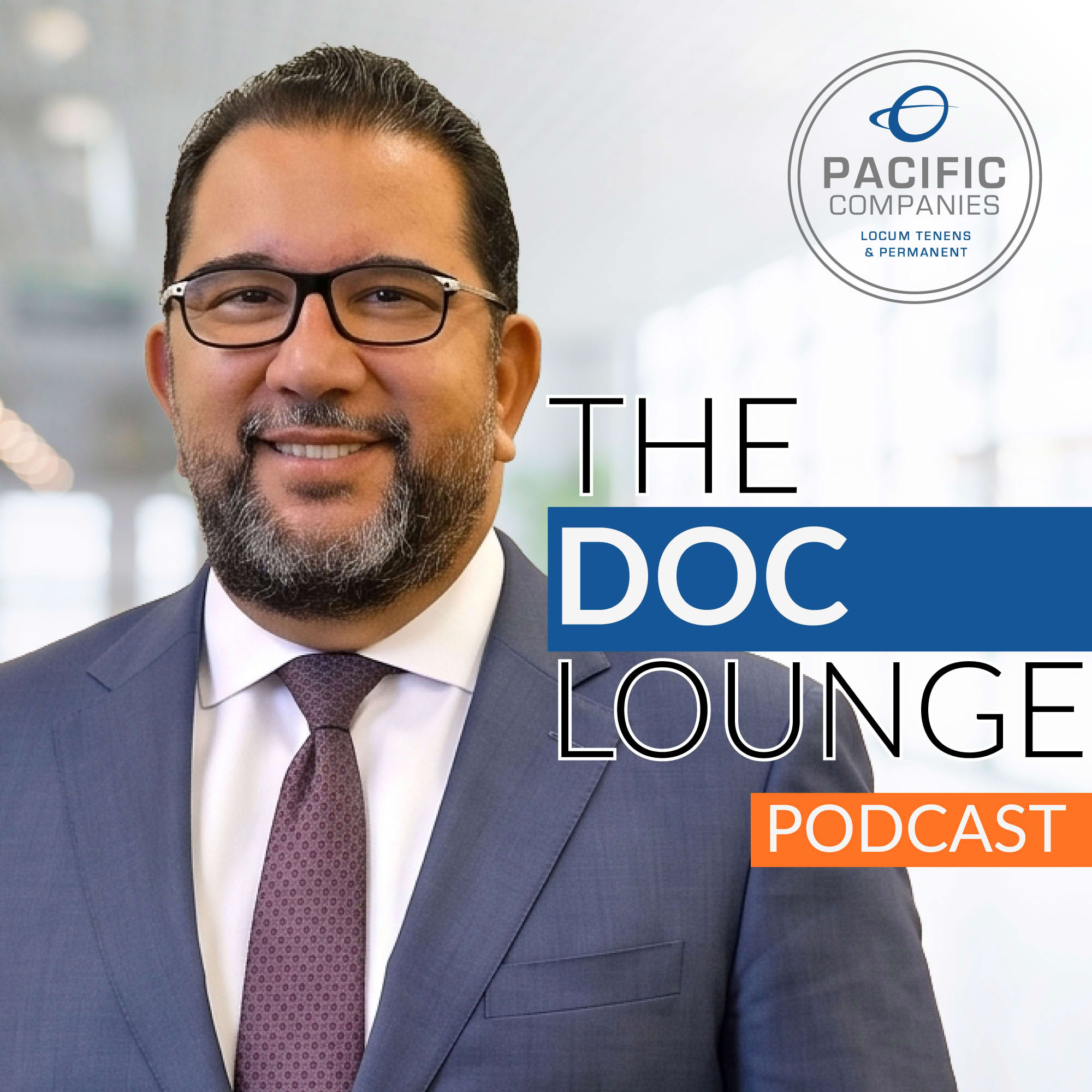
[00:00:20] Speaker B: Welcome back to the Doc Lounge Podcast. I'm your host, Stacey Doyle, Senior Director of Marketing at Pacific Companies. And today I'm joined by Alejandro Fernandez, CEO of Synergy orthopedic specialist and a healthcare care executive. With more than 30 years of experience building and leading multi site physician practices.
Alex brings a unique perspective to healthcare leadership because he truly worked his way through every level of practice operations. He began his career at the front desk in the early 1990s and went on to spend three decades helping physician groups improve their operations, scale effectively and better support their providers. In 2024, Alejandro was named Practice Executive of the Year by the American alliance of Orthopedic Executives. He also served as president of the South Florida MGMA chapter. Today we're discussing what physicians should really look for when considering a new group and what a CEO is evaluating when a physician wants to join. We'll explore why the business operations behind a practice can directly affect physician compensation, admin, burden, burnout and long term success. We'll also discuss how physicians can recognize a well run organization before they sign an agreement. Agreement. And why the right fit may sometimes be smaller or independent practice. So Alex, welcome to the Doc Lounge podcast. We're excited to have you.
[00:01:38] Speaker C: Thank you, Stacy, it's been a pleasure. Thank you for, for having me. I, you know, I know that particularly physicians starting out or positions that are looking to change their careers reach out to you guys all the time and are looking to try to figure out what their next step is, whether you know, as locums or they're looking to hire, you know, to find their next opportunity. So thank you for having me here. Really, really appreciate it.
[00:02:03] Speaker B: Well, we're excited to have you and I want to give you some, you know, an opportunity to tell us a little bit about your background and really what you know, that experience has helped you now as you're leading physician groups today.
[00:02:16] Speaker C: Yeah, I mean I'm glad you brought up the part about the front desk. You know, people ask me all the time how to get into this and in truth I was studying advertising and business administration and you know, for my undergraduate, but my parents are immigrants from Cuba. They didn't really have, you know, I didn't have like I did for my kids the fun set up to, to go away to college, et cetera. And so I had to pay my way through, through school. So I needed a job, I needed, so I went to school and at the same time I, I had a part time job and at the time I needed a job and I got front of staff at a doctor's office. I mean like that's how I got into healthcare. My parents are not physicians, they're in the retail industry and my family, a lot of my family's in the ret Brothers, also in healthcare. And that's how I started. So from there just over the last 30 years helping physicians, I mean I do have an MBA from health in Healthcare Administration from University of Miami and I'm very proud to be a, you know, um, graduate and but in reality just started from, from the beginning, from the ground up. And over the years I've been involved in private equity deals in gastroenterology, cardiovascular dermatology. Currently now running orthopedic medical group that's independent and I think there's different flavors for different folks. I've been involved in small practices. The first practice that I ran was a three doctor's office which currently those guys are still around in the same way they were before and they're close to 10, 12 doctors. So the practice is mature. Physicians have to figure out, I always say that they have to kind of like date, you know, they have to kind of first figure out the people. Do they blend in as their personalities. It's not just about the specialty and branding.
But is it where you want to be? Do you feel like this would be somewhere you would want to spend a significant amount of time? And more than ever physicians stay well before they would stay forever. Now I tend to think that they at least make one or two moves in their careers, maybe more depending on the type of business that they're in, if they're working for hospital systems or healthcare organizations, PE back, not PE back, et cetera, Small groups, large groups for sure. There's a lot of flavor. So I've been involved with many and look forward to providing feedback around that to your listeners.
[00:04:23] Speaker B: Well, I love that and I think that's a big piece here because I know we obviously speak with physicians all the time and they're focused on compensation, they're focused on call, you know, location, what those clinical responsibilities may be.
But it sounds like you're, you're telling us there should. They should also be examining the business itself. So tell us a little bit more about that.
[00:04:45] Speaker C: Yeah, I mean particularly. Well, I always start with the fact I tend to be biased around this, but I Think bigger is better. The larger the organization is, they're independent or not. The more capabilities they have, the more financial strength they have. Because at the end of the day, we negotiate rates based on strength. The payers will come in and say, hey, I want to pay you, you know, on Medicare, you know, 1, 1 to 1 to Medicare, or if you're part of a health system, maybe they pay you on a percent of charges. So the, the larger the organization, the larger the infrastructure, the larger the opportunity. But I think as it gets larger, it also loses a little bit of that. I think physicians go into medicine not just because they want to be physicians and they want to help people, but they also, there's an entrepreneurial part of their, their, in their, in their choosing. And you know, this, I mean, they go through, you know, what is 18, 20, in some cases, 20 years of learning. And the whole idea is that at the end they want to be able to have their name on the door. They want to be able to have this opportunity where they control their destiny, their control clinical care. They manage the business in one way or another. So I think the larger the organizations are, the harder it is to do that. Smaller organizations, you have a lot more autonomy around your, what you say, not just clinically, but just your staffing, how many employees. You know, you might be a dermatologist and you want several PAs that work with you. You have, you want several medical assistants to assess and help you take care of patients. And in large organizations they say, well, that's an extra cost maybe, yeah, that one PA is great, but not two and then one medical assistant, not three. So I think the large organizations, there's, they do bring in a significant amount of opportunity for revenue and resources, but at the same time you lose a little bit of governance and control over your, your business and what you want to do.
[00:06:29] Speaker B: Great insight there. Tell us about. You know, obviously you have evaluated a lot of practices. So if you are a physician that's thinking about, you know, making a move, what are signs that you can tell that a practice is well run?
[00:06:45] Speaker C: It starts, I would say from, from the physicians themselves, physician leadership. Are they happy? Do they feel that this is a great place to work? Is there an opportunity where the leaders or the physicians that you're talking to feel that there's financial strength behind the organization, particularly around independent practices. You could go into a practice of 10 or 12 and you think, well, that's a significant large group, but it's not professionally managed. There's some issues around revenue cycle management, maybe the contracts haven't been touched in years.
So I think that I go back to the idea of dating. I think it's great that, you know, particularly if you're doing locums, it is what it is. You're going in, doing your job and then you get out. But if you're going to be looking for long term opportunity, long term relationship, it's almost like dating. You have to talk to people several times. I think that physicians don't spend enough time in saying, okay, I'll come in and I'll spend a couple days, not just the day that they invite me and go out to dinner, but you know, spend a couple days with the practice, shadow the doctors, talk to them. Because I think as time goes by, goes by, the physicians will be more open to sharing, particularly the good, but they'll start sharing also the weaknesses or the issues that they personally perceive that the organization has. They might tell you, you know, whether it's, you know, they feel like they need more staff or the they're not allowed to do a certain thing because the organization doesn't, you know, there's capital, it's capital intensive and the organization doesn't want to pay for it. And you're like, well, that's very clear. That's, that's actually something that might be very important to you. Let's say a physician that, that needs access to a CT scanner and if you have to, the organization has an MRI and X ray and then, and that's something that's critical to your expertise. You might be, you know, somebody that does ultrasound guided endoscopy and that's not in their asc. So all those cases, you have to do them in the hospital.
So I mean, I think that the key is spending some time and finding out clinically and business wise what are the things that are going well. But if I look for specifics around key performance indicators. For me, for example, if I went to look for a job with a medical group, I'd be asking around overhead ratios, I'd be asking around key performance indicators, days to collect revenue, percentage of revenue collected against charges, rates compared to other rates in the community, and so on. Some things they could tell you, some things you have to sign NDAs for. But I think that again, if a physician spends the time, particularly if they're courting a couple different groups, I think it makes it behooves them to make sure that they don't get aligned with another group by chance. Because typically if it's good, then it will be good. Forever. But if it's bad, I mean, you might have to have relocated, maybe you have to move your family. There's a big opportunity. And I think that there's a percentage, there's this thought around that investment that you already made. And if the investment's going down, call it in a negative way, it starts becoming a loser. It's hard to cut that loss because you've made such an big investment by going in and bringing your family and changing your name and putting your name and credibility behind this particular brand or particular location. And if things are not going well, it's just harder to get out. So I think that it's very important that the physicians do as much diligence on the business as the business is doing on that.
[00:10:08] Speaker B: That's great practical advice that I think physicians, you know, can obviously use. And. And I really appreciate that dating analogy because it sounds like they need to also be listening for some of these negative things that could, you know, that you can uncover. And it sounds like having those list of questions handy is something that could really kind of help aid in that discovery. Are there any other.
Other questions that you want to recommend to physicians so that they kind of go in most prepared?
[00:10:42] Speaker C: Yeah, I think lifestyle is very important nowadays. We all want to work very hard, but it's not like how it was before, where you would say, okay, I'm going to go be on call literally 200 days a year, and I'm going to work seven days a week and so on. And again, to a degree, if you're starting your own practice from scratch or taking over somebody's practice, you might be doing that any.
But if you're looking for a lifestyle, understand the community you're going to go into, understand what the partners are like.
Do they like each other? Do they go out to dinner? Do they. Do the wives know each other? I think that that's also kind of like a second layer outside of just the business, but the culture and the environment and the organization. Wherever you're going to be, or are you going to just go in there and just kind of be like on your own, who's going to mentor you? There might be, you're a new cardiovascular surgeon and you're going into a particular market, are they going to feel like they hire you, but your competition or they hire you and then there's all this excess business that they're going to feed you or. And particularly, what are the dynamics, the financial dynamics for the partners to be able to, if they bring you on board? So I Think there's for sure a lot of other layers on a lot of the questions. I mean we literally spent hours on this. I would have to, I always have to think about it. I might have to like come up with like, you know, top, you know, hundred questions to ask.
It'd probably be a neat thing to do. 100 questions to ask when you're thinking of joining a medical group and can you get all those answers? I mean some of them might, they might not be able to give you answers to it, but I think you're making a big move just as they
[00:12:11] Speaker B: are and thinking about, you know, obviously we work with some, you know, of the very large hospitals and healthcare systems across the US Give us a few questions that they can ask, you know, physicians could ask if they're going, if they're looking at one of those type of settings as well. So they can.
[00:12:29] Speaker C: Yeah, I think, I think, funny enough, I think when you, you're in an employment model and that you are not, you don't have to worry about certain things. I mean there's always that, that you know, work RVU component, hey, you have to work X. But when you're working for a health system, typically they're set up in a way that the structure, particularly around referrals from primary care doctors or from other specialists is kind of built in. They already developed a significant amount of pro forma and there's some financial analysis that was done prior to making an investment on the physician. So I think again clearly there the relationships are a little bit different. You know, your head of your department, maybe the CEO or CEO of the hospital, trying to understand where do you fit into this whole realm? Are they building a new division, are they building a new department? Are they growing the department? Is it because some physicians are retiring and you're coming in to replace them? And some of those things are pretty clear. But I think the intangibles are always the most important things that we don't really talk about and we don't worry enough about which is the culture of the organization, the financial structure of the hospital. We know their hospital systems are closing down. Not only hospital systems, but the hospitals themselves are closing down. In some cases smaller hospital systems are being bought out by the health systems. So what's going to happen if you're working in a particular deal and then all of a sudden they bring, they merge these two hospitals, are you going to be out of a job? I mean for sure the non competes nowadays are pretty much gone throughout. In most states of the United States, they're not really enforceable. But are you going to move? Are you going to leave? So I think doing similarly, it's a little bit different legwork, but doing some legwork around the intangibles, the culture, what's going on with the overall health system's financial being, board directives, you know, where, where's the organization going? Are they stagnant or are they just trying to feed the, a particular community? Maybe if they're role, they just need this job because again the, the, the need is there and they haven't had success in bringing doctors from the community to, to fill those roles. So the last thing also you want to do is just show up to a job and find out that there's no real marketing plan for you and you're just going to sit around and wait for people to show up. It's like I get if you're getting a salary, that's not bad, but that's not going to be a long term solution in time. Whether you're going into private practice or into hospital system, you want to be the shining star. You want to be the person that's going out there, that's recruiting, that's talking, that's you know, doing the grand rounds, that's speaking to people. I think dealing with hospital, I would say politics is important and understanding, you know, kind of like where you fit into the whole model. But that's not any different than when you're trying to join a big group. You have to also fit. Where do you fit in a big group in regards to the, the politics of the, the overall group.
[00:15:18] Speaker B: So very insightful. Now tell us, obviously you just, you mentioned some of the benefits of large groups. It's the resource, the infrastructure, that stability. But that isn't always the right environment for, for every physician. So when might a smaller or independent practice be a better choice in your experience?
[00:15:37] Speaker C: Yeah, I think it goes back to your personal preference, the physician's preference. Do they, you know, again, the community, are they going to a rural community, are they going to urban community? Are they going to, they want to live, you know, in Texas versus living in California where, you know, I mean for me I worked in New York City, Miami, Florida and now in San Diego, California. I mean it's like three completely very different markets. But I, I, you know, I love all of them. I mean it just, you know, so you have to kind of figure out where, where you want to be. And so I think location and you mentioned that early on people worry about where am I going to go and how much money am I going to make? But once you where you want to go, the question is, are you going to be in, you know, 30 minutes or an hour away from the metropolitan area and that's where your clinic at, even though it's in the, in the market area or the dma because that's where the need was. Or are you going to be like in the middle of the city and that might not be something that you would like then. Now talking about smaller or larger, you might go to a larger practice that puts you where they need you or you might go to a small practice that is small. As let's say if a solo doctor, let's just say, hey, I started my practice and I want to, I want a second partner. I want somebody to kind of come in and share a call with me, somebody that's going to share my expenses and resources with me. Do you fit into that? So I think it's a lot of it is around personal preference and kind of fitting. I tend to feel that the smaller practices have a much harder time in trying to grow or develop financial metrics that make sense for them. Again, if you're one solo doctor and bring a second one, you're sharing resources. So that's going to be better for the first person. But if you compare that to joining maybe a seven doctor group, there might be better metrics than a seven doctor group. And if that seven doctor group is part of a pilot, a 35 doctor group that you know, the basically a smaller group within a bigger mso, then that might be even better metrics because you're getting this, call it a small group feel, five, seven doctors and then you're part of a much larger organization that's negotiating rates, being in professional management. So I mean I can again, I'm tend to be biased. That's kind of where I live. I live in that, you know, 35 to 100 doctor range. You're able to. Nowadays having access to ancillary services is extremely important one for patient care and continuity care and ease of referrals, et cetera. But also at some point in time you're going to be a primal partner. And if you are a gastroenterologist, you want to be part of the ase. And if you are as a gastroenterologist, maybe you do a lot of ibd. So you want to be able to have access to an infusion center, you want to be able to have maybe access to a pharmacy, you want to be able to have access to or you want your, your group to maybe own anesthesia, because anesthesia might be a revenue generation. It might be, they have a CT scanner and therefore you make some money around advanced imaging. Maybe they do research and you're interested in doing research. Maybe they are. Maybe they have a fellowship program and you're able. So even independent practices. Our group in particular has all the things that I just mentioned. You know, we have the ase, we have physical therapy, we have dme, we are anesthesiologists are employed by the group. So they feed the ASE that the practice owns. So understanding also the dynamics around not just employment, but the track to partnership two, three years, how much could it be? How much is it going to cost? Maybe you don't know, 100%. But what is it costing right now versus what it's going to cost in three, four years when you do become a partner? What are the financial metrics to get there? So again, it might make sense. I don't want to deal with any of this. I want to be, I want to go into a small group with three docs. I'll be the fourth. And I understand how everything's going to work and I understand the metrics to being a partner. And that's where I want to live. And particularly it might be in Austin, Texas, where my wife is from. And that's where our, our in laws are at. And we're going to have kids and we want to be in this great community that's, that's growing. I mean, you tend to follow your particularly physicians. I always, when we're negotiating, it's like, where are your wife from? Are they live in San Diego? Where are your in laws? They're like, if the answer is no, I know that I'm competing with somebody else. I'm competing with another health system or group or something because that's really where the family, particularly if they get along with their in laws, that's where they want to be. You want to be with family if you can.
[00:19:50] Speaker B: And I know we talk a lot about, you know, really fit runs both ways. So when you're evaluating a physician who wants to join your organization, what qualities tell you that person might thrive within the way that your group is operating?
[00:20:07] Speaker C: Yeah, I tend to think nowadays we always, we look for like a talent comes to us. We might not be looking for somebody in particular, but let's say I might not be looking for another sports doctor, but if a sports doctor comes to our, you know, wants to be in our market and maybe they've Been in practice for a while and I just did this with pain management. They were in New York. They're originally from, from San Diego, trained down here, families here. I think the dynamics like for me is like there has to be particularly in certain markets, the connection. New York City was super easy to hire. Everybody's young. They just finished their, their programs, their residency programs and they're like, I want to stay in New York. And it's like for me it was like, which practice can I put you in? I have one that's more clinical dermatology, one more cosmetic dermatology. If you have Mohs training, I want to put you in this location because they have all setup for Mohs and we have the pathology lab where in Jersey. Literally it was so much different trying to recruit. It was like, no, I don't want to live in New Jersey. I want to live in New York City. I'm like, well, live in New York City. Come and work. Like, no, I don't want that. So it's like in some places it's really hard to recruit. We have practices in Orlando. Well, Orlando is really cool to recruit, but some people don't want to live in Orlando and so on in San Diego. I always feel that the dynamics around compensation. San Diego is a very expensive city to live with, but the compensation overall tends to be lower than most markets. Other particularly other markets could pay an orthopedic surgeon or can make. So I always look as like, are you coming here because there's family? Are you coming here because you're looking for lifestyle? You like surfing? You want to be able to finish your practice at 4 o' clock or start at 9 and go do this or do that, or you're active, you're a runner, you're a hiker. What is it that's attracting you to our practice? And I usually do it that way. I want to make sure there's a fit from them that more than there's a fit from us. Because if we feel it's a there's a fit, usually there's going to be a fit the other way as well. Spouses for sure or partners, they have a big he say and what how decisions are made. I know that I do that for me for, with my wife. Somebody called me up when I got this job and they said, oh, you know, the opportunity is in San Diego. And immediately after I finish, I called my wife, said, hey, what do you think about San Diego? She's like, when are we moving? Versus if I would have said probably Anywhere else, I don't know. I don't want to put negative around any particular market, but in other markets she likes water, she likes coastal and she likes warm weather. So if I told her New York was hard, believe it or not, it just going to New York, it was a great opportunity and exciting for us. But at the end the spouse has a lot to do. So I'm always looking to see where's that connection. Is it family?
The money and everything else just will land. If it were, if it works, if we have a budget, they have a budget. And if we can meet, you know, if everybody can be unhappy, I think we're happy, that works well. So I think the key there is finding the right people and then personality as well. I think that I like to have several interviews. I like to have the telephone interview. I like to have a personal day meeting, probably a full day meeting with multiple people, show them around different offices, have a meet and sit down with different doctors, preferably another day if it's possible, so that they follow with one or two doctors so we get to see and talk to them personally. Maybe if it's a surgical procedure, make sure that they go into the ASC or the hospital and do rounds, et cetera. Just kind of get feeling it, preferably just with one doctor. I prefer that they do it two or three. So we have a consensus as a group. Yes, this is somebody we want to, not necessarily just hire. Is somebody want to invest in. Because it takes a lot from credentialing, billing training, staffing. We have to build a whole biosystem around them, staffing, etc. Just making sure everything gels, everything makes sense. So if we're going to bring somebody on board, it has to really make sense for them as much as it has to make sense for us.
[00:23:56] Speaker B: Great insights there. So thank you for sharing kind of what you're looking for and how. How that works the other way around.
So to wrap this up, I want to just let you what is the single most important question you think a physician should ask if they're going to be joining a group? What was that biggest question that you would recommend?
[00:24:14] Speaker C: I think for every person it's going to be different. But I think that you have to look retrospectively at yourself and what's really important for you and you're in the likelihood and try to find out why should they join this organization for the rest of their life? I know that that sounds really corny that I'm going to be here for the rest of my life. But as a physician, you almost have to think that way.
What is it that why should I come here and invest and be part of this for the rest of my life? Like start now and I want to be here till the day I retire. And I think if an organization can't really answer that concisely or has not taken the time to learn about you and your Persona and your wants and needs, not just professional, but personally, your career goals, your personal goals. And if those things don't match up, it's probably not a good match. You should probably run away because again, we typically do. We go into opportunities thinking they're going to be positive and then we find out all the negatives and then we feel like it's so taxing to try to get out of it, to try to like you. You, you, you just continue trying to invest. I always compare it kind of like the stock. You buy a bad stock and it goes down in price and you're like, I hope it goes up, I hope it goes up. And you're waiting for it to go up and then instead of just cutting your losses early on and just moving on, you kind of stick with it and then you become this misery of a person that, and I feel like when I first came to this group, there's a couple people that just didn't live in. They, they didn't like the overall idea that the group had. They wanted this very loosey goosey type organization, sort of a very strong clinical operation and very strong leader, physician led organization. And they left. And I think that's actually the best thing. So if you're going to look for a job, make sure you, it's going to be the job that you're going to have for the rest of your life.
[00:26:06] Speaker B: Great advice, great wisdom and I really appreciate you sharing all of everything that you've learned to build so many successful practices with our physician audience that's listening and trying to figure out, you know, how to determine where to go and what moves to make. Alex, please share how anyone can get in touch with you and learn more.
[00:26:28] Speaker C: Yeah, for sure. On LinkedIn, Instagram, social media, YouTube, all of them. It's Alex Fernandez MBA. So it's easy. Just any, any social media channel, Alex Fernandez mba and you'll be able to reach out to me. And again I'm here to help out whichever way I can.
[00:26:44] Speaker B: Fantastic. Well, thanks so much for your time. We really appreciate it.
[00:26:48] Speaker A: Thank you to all of our listeners. If you would like to be notified when new episodes air, make sure to hit that subscribe button and a big thank you to Pacific Companies. Without you guys this podcast would not be possible.
If you would like to be a guest, Please go to www.pacificcompanies.com com. Thank you.